The pricing model depends on the type of service (FTL or LTL), the goods and how regular the volumes are.
In practice, LTL often combines weight and volume, applying whichever is higher.

The road freight rate is the price a carrier charges a shipper to transport goods by road. It is usually expressed per kilometer, per ton, per pallet or as a flat rate for a given route. It must cover the carrier's operating costs and generate a margin, which is structurally thin in this industry.
The market is highly fragmented, with a large number of small and mid-sized carriers alongside a few large groups. Rates are negotiated on two markets:

Road freight rates result from two opposing forces:
Operating costs: wages, diesel, tolls, truck maintenance and fleet renewal. They push rates up and set the level below which a carrier cannot operate sustainably.
Transport demand: when it weakens, carriers compete to fill their trucks and rates fall. When it tightens, spot rates rise first, followed by contract rates at renegotiation.
Contract rates closely track operating costs, with a lag of a few months. Data now makes it easier to anticipate transport price volatility.


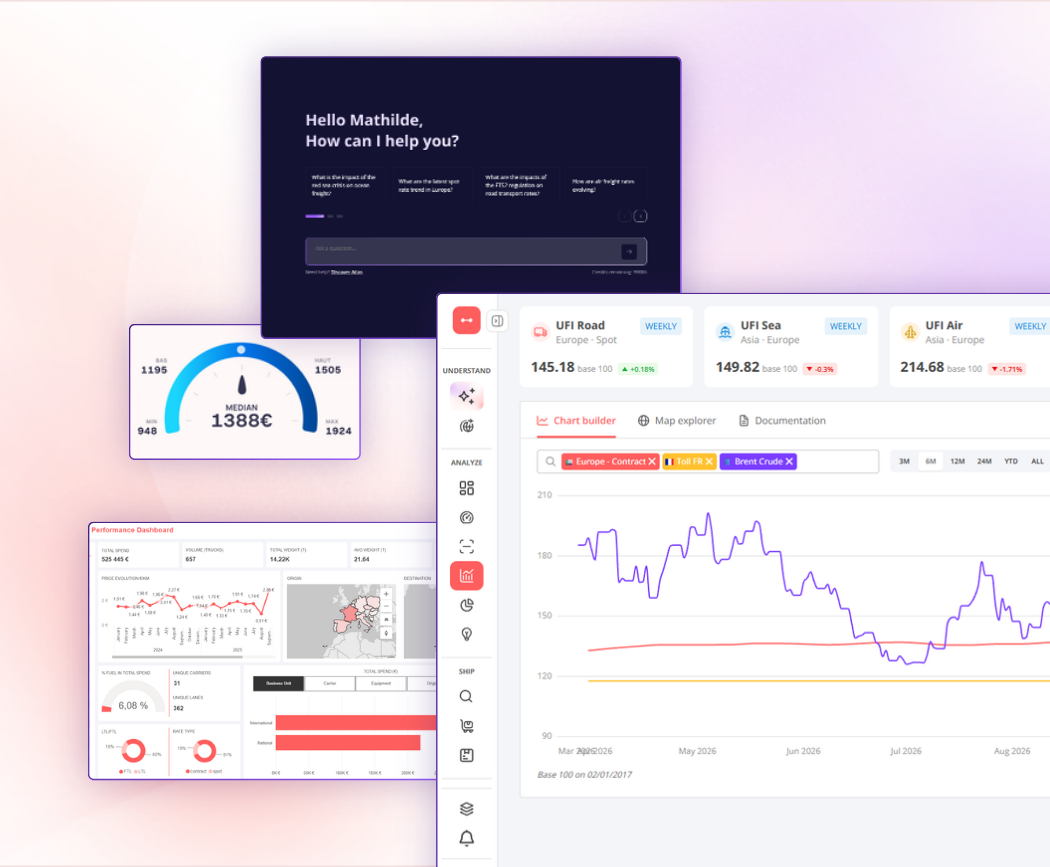
Several of these indicators are tracked in Data Hub, Upply's interface that brings together freight indices on energy, economic activity and transport markets.
Drivers: the largest cost item. The driver shortage in Europe pushes wages up and reduces capacity.
Diesel: the second largest cost item, linked to oil prices and each country's fuel taxes.
Vehicles and maintenance: fleet renewal is increasingly expensive, especially for electric trucks.
Tolls: the revised Eurovignette Directive introduces CO2-based tolls. In Germany, the CO2 charge nearly doubled truck tolls in late 2023.
Regulation: the Mobility Package (cabotage, posting of drivers, smart tachograph) and the upcoming ETS2 increase compliance costs.
Economic activity: freight volumes follow industrial production and consumption. A slowdown reduces demand and weighs on rates.
Fuel prices: changes are quickly passed on to spot rates, then to contract rates through diesel indexation.
Seasonality: the year-end peak and drivers' summer holidays create temporary capacity tensions.
Geopolitics: conflicts and energy crises can trigger sharp increases, as with the diesel price spike in early 2026.
The type of goods directly affects the rate: temperature-controlled, dangerous or oversized loads require specific equipment and skills, which come at a cost.
Beyond the base rate, several charges can be added to the invoice. The most common are:
Diesel indexation (fuel surcharge): it passes changes in diesel prices on to the transport rate. In France, it is mandatory and usually based on the CNR diesel index.
Tolls: increasingly expensive with the introduction of CO2-based tolls.
Waiting time or detention: charged beyond a free time allowance at loading or unloading.
Specific services: dangerous goods (ADR), temperature control, tail lift, delivery by appointment, on weekends or in hard-to-reach areas.
Ad valorem insurance: for goods whose value exceeds the standard legal coverage.
Essential for recent diesel trucks to run, AdBlue is a cost item in its own right for carriers. A shortage can ground part of their fleets and weigh on rates.


Mix contract and spot: cover regular volumes with contracts and keep a spot share for flexibility.
Plan tenders ahead: well-forecast volumes help secure better contract rates.
Diversify your carriers: working with several operators reduces dependency and strengthens your negotiating position.
Use market price benchmarking tools to back up your negotiations with data and avoid overpaying.
As an indication, for a flow within Europe:
Road: average cost, short lead time, maximum flexibility and door-to-door delivery. The go-to mode for short and medium distances.
Rail: lower cost over long distances and for regular volumes, but less flexible and limited to terminals.
Inland waterways: very competitive for heavy bulk goods along major rivers, but slow and with limited reach.
Air: shortest lead time, much higher cost, reserved for urgent or high-value shipments.
For intercontinental flows, road freight mainly handles pre- and on-carriage for ocean freight. For an up-to-date comparison on your key corridors, use Upply Benchmark.

Ready to optimize your road freight costs?
With Upply, shippers, carriers and consulting firms can:
Compare their spot and contract road freight rates with the market
Track key market indicators
Analyze their transport spend and prepare renegotiations