What is containerized ocean freight?
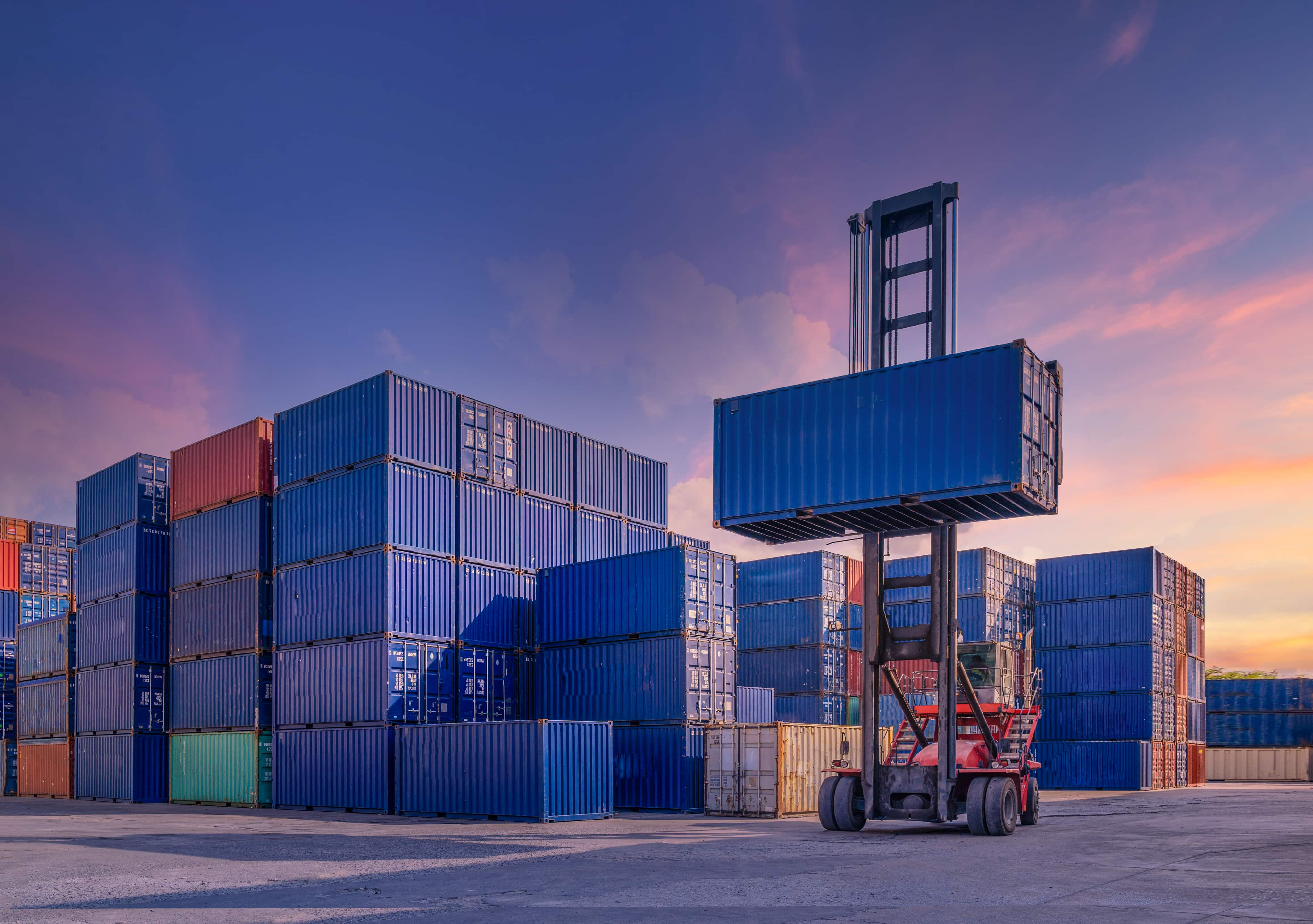
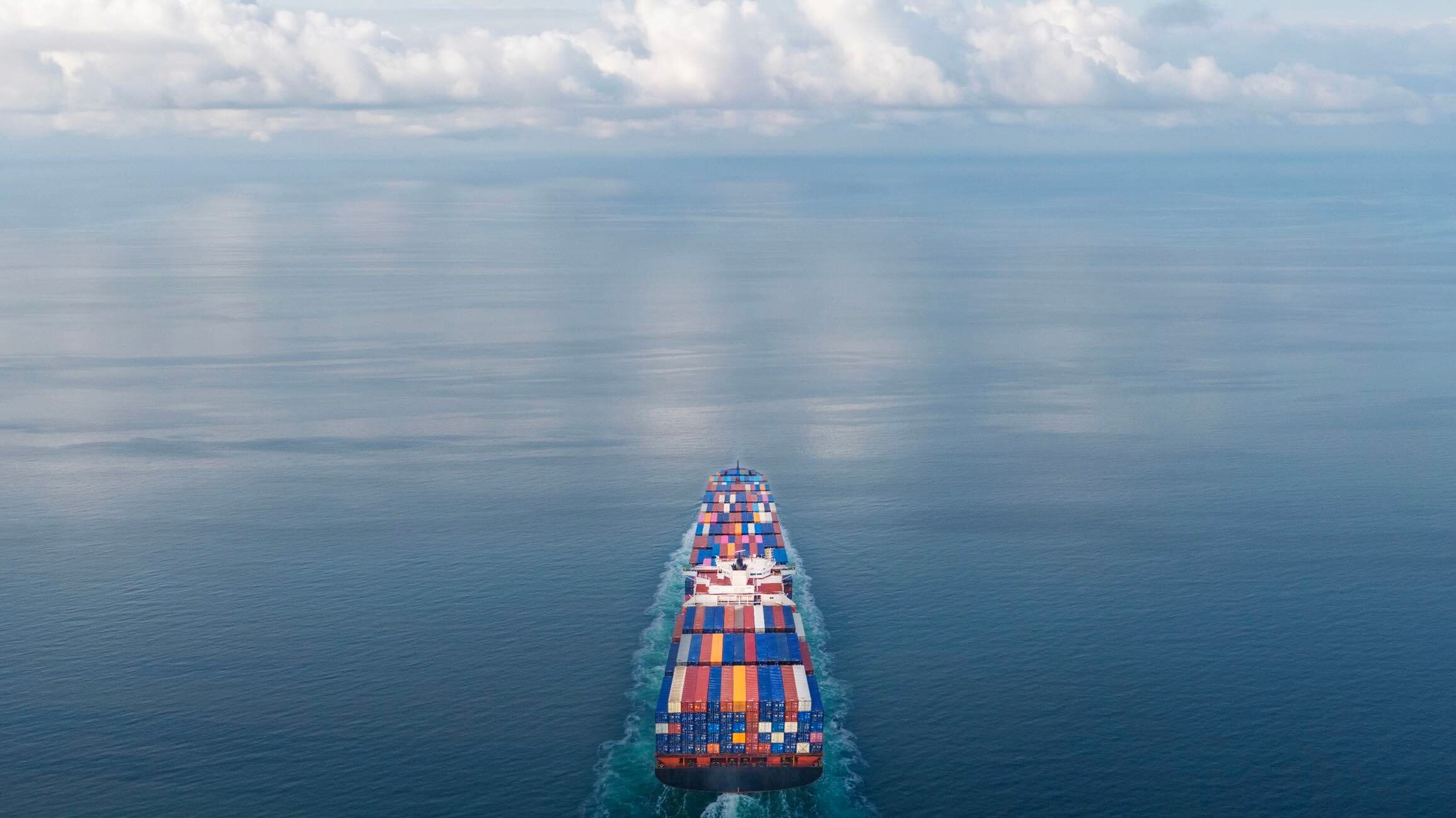
Ocean freight refers to all operations involving the transport of goods by sea, on ships across oceans and seas. Its most common form, containerized shipping, involves transporting goods in standardized containers (20' or 40') loaded onto container ships.
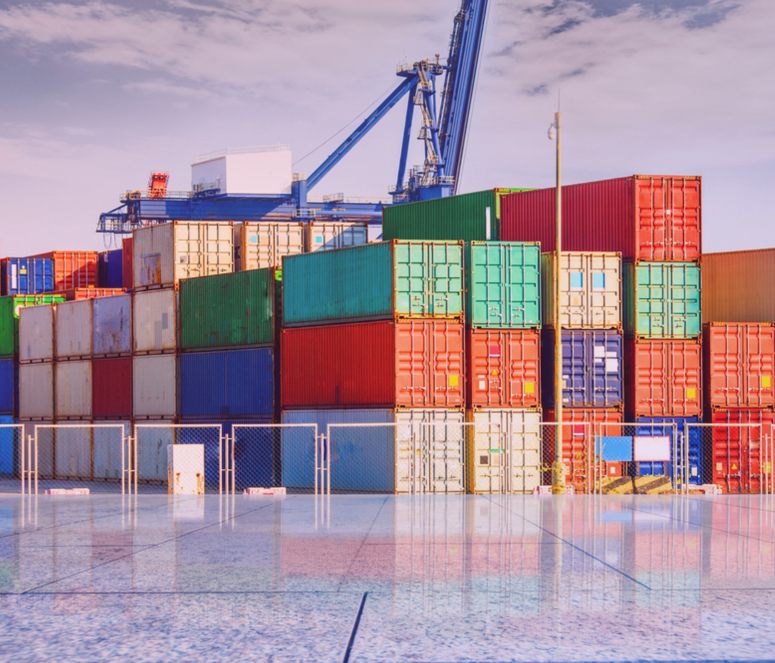
Containerized transport plays a central role in global supply chains. The same container can be transferred from a ship to a train or truck without unloading the cargo, which simplifies intermodal operations and ensures the smooth flow of goods.


How does containerized ocean transport work?
Check out our regular update on these market trends on our ocean freight news page.
Key players are the carrier, the shipper, the freight forwarder, the NVOCC, the customs broker, and the port authority and the terminal operator, which are responsible for port infrastructure and operations.
-
Booking: the shipper or their forwarder reserves space with a carrier
-
Stuffing: loading goods into the container
-
Gate-in: the container is delivered to the terminal at the port of origin
-
Loading: the container is loaded onto the vessel
-
Ocean transit: depending on the service string chosen (direct or with transshipment)
-
Discharge and port handling: at the destination port
-
Customs clearance: import formalities
-
Final delivery: to the consignee
Shippers choose between FCL (full container load) and LCL (less than container load) / consolidation, sharing a container with other shippers.
Direct routes are faster but less frequent; transshipment via a hub (Tangier Med, Singapore, Rotterdam) provides broader global coverage.
- Asia – North (including Shanghai – Le Havre or Rotterdam) : one of the world's major container shipping routes
- Transpacific (Shanghai – Long Beach / Los Angeles)
- Transatlantic (Antwerp – New York)
- Intra-Asia, Intra-Europe, Africa, South America
The price paid by the shipper is not limited to the base freight rate: it also includes port handling charges and various surcharges, which often makes it difficult to compare quotes.
What are the benefits of containerized ocean freight?
-
Massive capacity: up to 24,000 TEU for a modern container ship
-
Low unit cost: one of the lowest costs per metric ton-kilometer among all modes of transportation
-
Global and standardized coverage: near-universal services to every continent, thanks to the ISO container standard, which facilitates the transfer between sea, rail, and road
-
Cargo security: the container physically protects the cargo, reducing theft and damage risk
-
Low carbon footprint per tonne shipped: compared with air or long-haul road transport
-
LCL flexibility: ability to ship small volumes without chartering a full container
What are the drawbacks of containerized ocean freight?
-
Long transit time: an Asia–Europe transit typically takes 25 to 35 days, or longer if a detour is required
-
Rate volatility: sharp and rapid fluctuations, particularly in times of conflict
-
Port congestion and delays: frequent disruptions that ripple through the supply chain
-
Limited schedule reliability: service punctuality varies significantly depending on the time of day, the route, and the level of congestion
-
Complex ancillary fees: the proliferation of surcharges makes final costs hard to compare and forecast
-
Geopolitical dependence: crises (the Red Sea, the Panama Canal, trade tensions) are reshaping shipping routes, driving up costs and the carbon footprint within weeks

Large (FCL) or medium (LCL) volumes
Suitable
Non-perishable goods (or reefer available)
Suitable

High-value goods with short lead times
Not suitable
Unconstrained lead times
Suitable
Logistics cost optimization
Suitable
Short-haul domestic routes, particularly within Europe
Generally not well-suited: prioritize road, rail, or a multimodal solution depending on the corridor
Low- to medium-value goods
Suitable
Urgent delivery (under 1 week)
Not suitable, favor air freight
-
Large (FCL) or medium (LCL) volumes
Suitable
-
Non-perishable goods (or reefer available)
Suitable
-
High-value goods with short lead times
Not suitable
-
Unconstrained lead times
Suitable
-
Logistics cost optimization
Suitable
-
Short-haul domestic routes, particularly within Europe
Generally not well-suited: prioritize road, rail, or a multimodal solution depending on the corridor
-
Low- to medium-value goods
Suitable
-
Urgent delivery (under 1 week)
Not suitable, favor air freight
SCFI, CCFI and the Upply Freight Index (UFI), Upply's proprietary index, based on real invoiced prices, both spot and contractual.
On-Time Performance (OTP — the share of vessels arriving on schedule), average vessel delay, and the port congestion index help track punctuality and the smoothness of port operations.
The order book, which tracks the capacity of ships that have been ordered but not yet delivered, provides insight into future supply trends. Blank sailings and the idle fleet round out this analysis from a shorter-term perspective.
-
PMI Manufacturing (available on Upply Data Hub): a leading signal of transport demand
-
Global trade volume (WTO/IMF): the fundamental demand driver
-
Bunker fuel price: a major component of carrier costs
-
USD/EUR exchange rate: impacts competitiveness and pricing
-
Tariffs and geopolitical tensions: redraw routes and volumes
Ready to take control of your ocean freight operations?
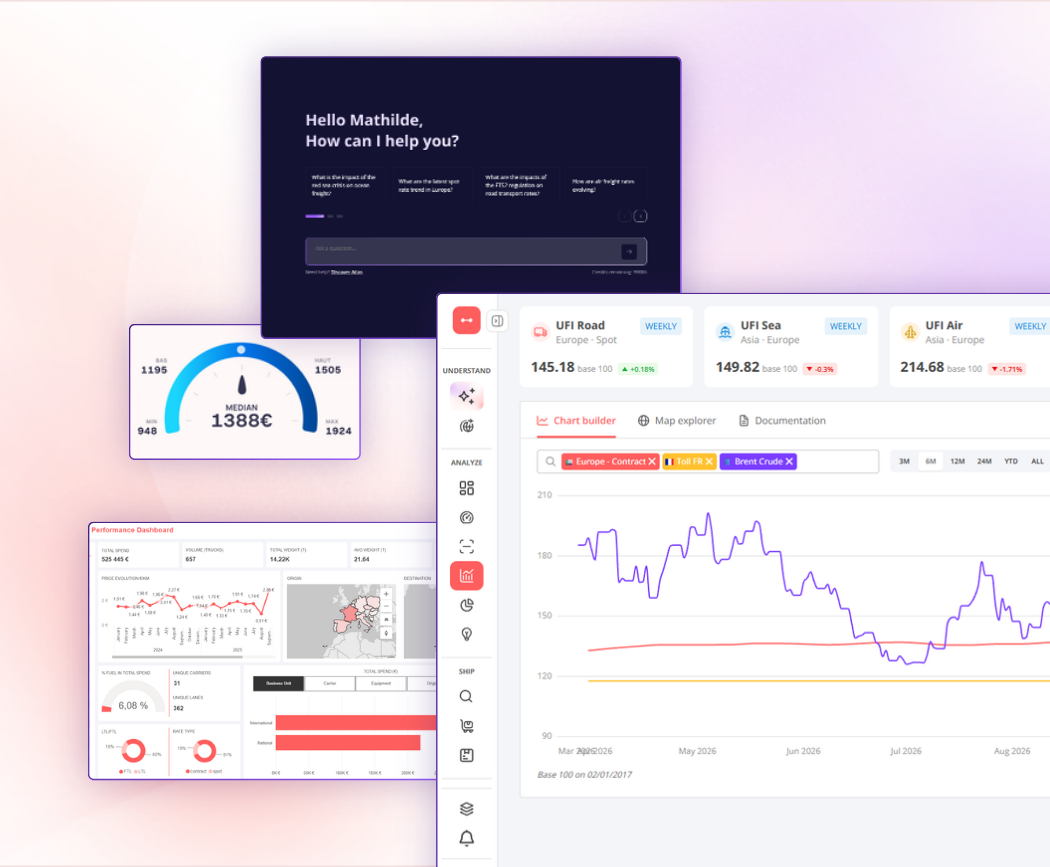
Shippers, carriers, and consulting firms rely on Upply, the intelligent transport management platform, to:
- Benchmark their ocean freight rates (spot and contractual) against real market prices
- Track key market indices
- Query the market in natural language with Atlas, to get ready-to-use analysis